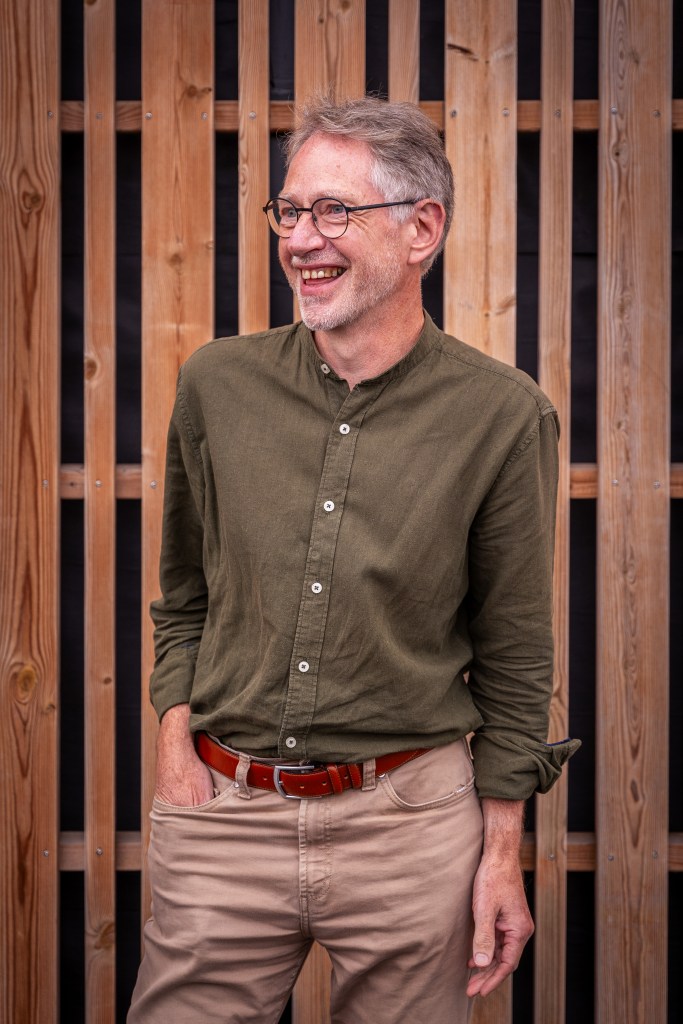
Julian Dobson
intelligence and inspiration
for better living
Profile
Summary
I am a writer, editor, facilitator and consultant specialising in regeneration and sustainable communities - in other words, how to make the places we live in better and enable the people who live there to create better lives for themselves.
I was the founding editor of New Start magazine in 1999 and was editorial director until October 2010. I was editor of Inside Housing magazine from 1993 to 1998. I previously specialised in healthcare (the Health Service Journal), social housing and trade unions, having served an apprenticeship on local papers in Kent and South Wales.
Through Urban Pollinators Ltd I help people and organisations share learning and good practice, communicate in language people of all backgrounds can understand, manage editorial and communications projects - and much more!
I am a Fellow of the RSA and a voluntary board member at the Centre for Local Economic Strategies.
You can also find me at http://twitter.com/juliandobson
Experience
- 2009 - PresentVoluntary board member / Centre for Local Economic StrategiesAdviser on strategic direction and governance.
- Oct 2006 - PresentDirector / Urban Pollinators LtdUrban Pollinators is a practical think tank. We help people work through complex and challenging issues about placemaking, regeneration and society. We do that through research, writing, facilitation and training.
- Dec 1998 - Presenteditorial director / New Start Publishing LtdNew Start is the magazine for all involved in regeneration, economic development and sustainable communities. I was the founding editor of New Start and continue to work as a director of the company, with oversight of the editorial team and content. I write a regular column for the magazine and contribute occasional features, and am often involved in New Start's events.
- 1993 - PresentEditor, Inside Housing magazine / Inside CommunicationsEdited the national weekly magazine for housing professionals.
Education
-
1978 - 1981University of OxfordBA in English
Posts
| Peabody flats, Westminster: what chance of housing low-paid workers there now? |
Speaking at a conference on ‘streetscapes’ last week, I issued a tongue-in-cheek manifesto: Just Say No to Benches and Bollards.
My grouse wasn’t with street furniture in itself, but the thoughtless spending of public money on ill-considered public realm improvements as a substitute for thinking through what would really bring people back to our high streets and town centres.
| Sheffield: a haven for traffic-watchers |
But I was (quite rightly) challenged about the Say No to Benches bit. Places to sit are especially important for parents, kids and older people: in an ageing society, we need to think about how people can stop and rest on their way to and from the shops, park, post office or wherever. Recent government work on Lifetime Neighbourhoods offers food for thought (and action).
But there are benches and benches. So – either as an act of contrition or provocation – let me offer you a small celebration of street furniture.
We’ll start in my home city of Sheffield. I imagine many were awestruck last year at the amount of care and attention given to the improvement of the roundabout at the junction of Eyre Street and Arundel Gate. The planting is a joy to behold, and it looks as if no expense has been spared on the paving and the benches.
Ah yes, the benches. Glossy and sensuous, with funky blue lighting beneath them. Who wouldn’t want to sit there? Possibly people who don’t get a buzz out of watching traffic go round roundabouts, or the few people who aren’t aficionados of Sheffield’s impressive range of bus services. Oddly, despite all the care that’s gone into this seating, I’ve never seen anyone using it.
| Glasgow: urban design for Nowhere Man |
Unfortunately there’s only room for four. And there’s nothing else to entice you to this little patch of nothing in particular, unless you happen to work there. A nice idea, but perhaps intended to be more symbolic of an idea of public space than something to be used.
At the other end of the country, the complete opposite: in parsimonious Portsmouth, bog standard benches and a couple of bins around a patch of unadorned paving will do. It reminds me of a piece I recently heard by performance poet Gav Roberts, ‘perfunctory parks for the oppressed’.
| Portsmouth: Here's a bench, now stop moaning |
Finally, let’s whizz over to Manchester, where an impressive new community park has just been opened in the east of the city, changing a run-down construction yard into a green space with artworks and places to sit. Could this be how to get it right?
It’s certainly an improvement. But the places to sit are… well, different. They are walls with angled coping that tip you into the grass behind, and odd little perches that, it seems, are intended to be leant on rather than sat on. Why create a space and then go out of your way to make it difficult to use?
| Manchester: we'd love you to sit here, but not for long |
So there you have it: you can have parks for the people, as long as they aren’t encouraged to sit on the seating. And you can have public space, but public use of it is another thing altogether.
| Farewell funky visions: now it's time to start small |
| Titanic Belfast, seen from across the river |
| In context: Titanic Quarter apartments |
| Parkside: still waiting |
| Just a few streets away from the Parkside terraces |
| Alexandra Park: parallel lives |
| New Lodge mural |
Suddenly there are pots of money to transform high streets all over the place. The government has announced its long-awaited response to the Portas Review, and you can't accuse them of sitting on their thumbs.
The conundrum of community action is that it doesn't fit comfortably into anyone's system or narrative. We're dealing with the continuous struggle to make a messy world better for all of us, and we don't have a theory of mess that is really up to the job.
This is not for want of effort among generations of community development practitioners, psychologists, systems thinkers, communitarians and, more recently, apologists for the big society. There is a consensus that community empowerment is a Good Thing. The consensus drifts apart when you start to probe what it might be good for.
This is why the 'cover for cuts' narrative is so powerful. Government talks the talk of community. At the same time, and very visibly, it removes some of the supports communities have relied on. QED. But beware simple narratives.
The Department for Communities and Local Government (which some might consider an oxymoron in itself) appears to genuinely want to devolve power. It has been having a series of conversations about how to, in its words, 'mobilise neighbourhoods'. It recognises that the new community rights set out in the Localism Act won't mean a thing if nobody takes advantage of them.
I was involved in one of these conversations this week, and while it was clear that civil servants want to encourage neighbourhood action, it was less clear what they wanted neighbourhood action for. This is important because one of the critiques of the government's community organising programme is that it encourages local residents to see their local councils as the root of their problems.
For me, what is missing from the conversations is clarity about what neighbourhood mobilising is for, a full appreciation of the context, and an understanding of the consequences. All these issues are far too complex and rich in detail to cover adequately in a blog post, so this is just a sketch of the territory we need to explore.
First, clarity. Why do we want to neighbourhoods to 'mobilise' anyway? I've seen neighbourhoods mobilising against mobile phone masts, planning applications, and Gypsies. Presumably this isn't what government has in mind. I've also seen people get together to plant vegetables, fight crime, and organise celebrations. Read what Eric Pickles has to say and you could conclude this is the government's agenda.
I am always impressed and often inspired by the latter form of community action. But I'm perplexed at the notion that central government has much of a role at this micro level. If there is one, I'd argue - as others did - that it should be to facilitate networking and the sharing of learning, a role that's vital but not hugely burdensome for a government department.
There's a more important agenda, though, that hasn't been clearly articulated. This is about resilience and enhancing people's ability to take control of their own lives and environment.
The fear is always that this will be done at the expense of outsiders; however, I'm encouraged when I see evidence that ordinary people are often far more generous and welcoming than politicians expect them to be. Projects like Sheffield's City of Sanctuary would never have come out of central government policy, irrespective of the party in power.
The reason we need to encourage community action for resilience and mutual benefit is to do with the context. An ageing population, continued economic stagnation (at best) and the likely consequences of climate change will all put growing pressures on state finances. And in the immediate future, the spending choices of this government are ratcheting up the pressure on the most deprived neighbourhoods.
The announcement in Wednesday's Budget that another £10bn would be cut from welfare spending went largely unremarked, but if will do real damage to the lives of people who are already at the bottom of the heap. Many who do have jobs are also struggling (see this case study, for example). What's more, the services they rely on are being reduced and these reductions will continue, as this article by Tony Travers makes clear.
So part of the context is that we have to mobilise communities just to get by. I heard this week that three new food banks are due to open in Sheffield, helping people in crisis who can't put bread on the table. The Trussell Trust now has a network of 170 food banks across the country. In a nation that pioneered free healthcare and decent pensions, a growing number are finding times when they struggle to feed their families.
And this is why we need to think about the consequences of mobilising communities. The benefits of encouraging people to look after each other and build mutual reliance are obvious. The benefits of community control and ownership are more contentious, given that physical assets often turn out to be liabilities, but there is still a lot to be said for giving local people the right to occupy and use assets that others are neglecting.
Where it gets interesting is that when communities mobilise they start to want to tackle injustices, real or perceived. Often government is seen as the perpetrator. The consequence of encouraging community action in areas that feel they are taking a beating from government may well be an organised backlash against government.
This will put localists on the spot, as I indicated in last week's post about the West Kensington and Gibbs Green estates. The natural and political reaction will be to pull the plug. A more farsighted approach will be to risk the backlash because campaigns of opposition can build community. If the real objective is to enable people to become more self-reliant, a bit of red-blooded campaigning might be just what the doctor ordered.
| West Kensington estate: move along now, nothing to see here? Picture by West Ken and Gibbs Green |
‘I want to make it easier than ever for council tenants to take charge of local services, from minor repairs to major regeneration. And it will no longer be acceptable for councils to dismiss tenants' proposals for improvement out of hand. Nobody knows the needs of a neighbourhood better than the local community. Now I want to see tenants use these powers to prove us right.’
| Urban is as urban thinks? |
'A city! It is the grip of man upon nature. It is a human operation directed against nature, a human organism both for protection and for work.'
'If we would lay a new foundation for urban life, we must understand the historic nature of the city, and distinguish between its original functions, those that have emerged from it, and those that may still be called forth.'
It’s like your front room, but with pigeons and no chance of fighting over the remote. Welcome to the new world of telly-dominated public spaces.
| Waiting for the gift of sound and vision. Picture by PaulSh |
I like Victoria Square. Its public art, its use of different levels and sense of enclosure, and its position at the civic heart of Birmingham make it a great space. As Les Huckfield commented on Twitter, there are days when the whole of Victoria Square is ‘alive in an unrivalled cultural mix’.
No doubt some bright spark at the BBC thought the big screen would be a superb way of bringing this cultural mix together. There are big screens in 22 cities and towns now, a joint venture between the BBC, local authorities and the Olympic organising committee.
The BBC says, without the faintest hint of irony, that this will bring our cities to life:
Each screen is customised to reflect life in its community with a broad range of local content, including events listings, events and partnerships with community, arts and media organisations.
The promotional video says the screens will bring local communities together, and shows clips of people cheering at sporting events and ‘interacting’ with no doubt carefully crafted digital content.
Imagine that. Public spaces customised to reflect their local communities. Who’d have thought it? Luckily we have a huge national corporation to show us what to do.
Not everyone thinks this is a great idea. Following my initial comment on Twitter, people voiced their displeasure at the screens in Millennium Square, Bristol (‘embarrassing, blaring away to everybody and nobody’) and Manchester’s Exchange Square (‘horrible’).
Dan Gregory sarcastically tweeted: ‘Think of it as a brilliant piece of public art. What else could reflect the lives of the people of Brum than a supersized TV screen?’
The trouble is the people at the BBC really think that. They see the big screens as not only extensions of Olympic jollity but also as showcases for local talent.
I’m all for showcasing local talent. But seriously, do we need to mediate it through a giant screen and the BBC’s filters of what constitutes good taste and acceptable content?
The point about public space is that it’s a setting for the public – for people to make what they want of it, a stage for formal or informal performance, a place of meeting and conversation. The users of the space become its creators. Stick a 25 square metre screen in and everyone faces in the same direction.
In George Orwell’s Nineteen Eighty-Four, public screens were used to channel the energies of a cowed populace into the fury of the Two Minutes’ Hate. In today’s public spaces all you need to subdue the masses is a steady stream of cheery blandness, with occasional interjections by Robert Peston.
When I run workshops I often ask people to bring in a picture of somewhere they think is a great place. There’d be pictures of the Taj Mahal, the Golden Temple at Amritsar, or Bradford City Hall.
| It's a place... great. Picture by Jim Barker |
What he didn’t say, but is part of the Asda recipe, is that you don’t really have to interact with anyone else. You arrive in a box cocooned from other people. In the store what interaction you have is with the produce, not the other customers. At the checkout there might be a ‘good afternoon’ or a ‘thank you’ – or you could go to a self-service checkout and not bother with any of that. And then you’re on your way.
Urbanists, designers, and people like me throw their hands up in horror at such an approach to life. Where’s the civility, the animation, the variety, the interest? Where’s the sense that life isn’t entirely dominated by the need to shift goods and sell and consume and then come back for more?
And yet for many people the triangulation of life is the house they live in, the building they work in and the store they shop in. Huge vested interests work to keep it that way: to keep our heads down, our eyes half-shut and our minds half-closed.
It can be hard to escape the drudgery of life and the big retailers, the volume housebuilders and the purveyors of dead-end work do just enough to numb the pain of it all. There’s something to be said for not having to work harder than you must, living in a house where everything comes fitted, or doing all your shopping in the same big shed as everyone else. And the Asda car park becomes a great place: a place that is supremely functional and unchallenging.
You can quickly move from youth to middle age to tired old age in these great places, without noticing very much, feeling very much or changing very much.
Truly great places aren’t like that. But neither are they the upmarket, cultured alternatives for people with the resources to get their shopping delivered to them and the leisure time to idle in charming surroundings. The mistake many urbanists make is to imagine that great places are full of well-heeled people having polite conversations and sipping good wine in a pastiche version of a Parisian street café.
This too is a sanitised, dulled version of the real thing. A truly great place changes you. It makes you look twice and think twice. It stirs a reaction.
For me, a great place is the chilli in the curry. It may be a carefully designed place that succeeds in bringing unlikely people together, like Sheffield’s Peace Gardens; it may be one that brings a smile to your face or presents you with something you never quite noticed before; or it may be somewhere that acts as a challenge to its surroundings, to neglect and dullness and the despotism of the everyday.
Last week I was told about the Edible Bus Stop. A patch of uninviting grass by a bus stop in Lambeth, south London, once the site of homes bombed during the second world war, has become a communal garden.
A year ago this was just another drab weed patch. Two neighbours decided to do something about it, put out 400 leaflets and persuaded 40 people to turn up one morning and start digging.
Local people donated plants, a helpful councillor kept things sweet with the local authority, and a boring, uncared for space became a community hub. A street party last July was a roaring success. Next weekend (11 March) locals are getting together for a first anniversary dig to prepare for the new growing season.
The Edible Bus Stop is a great place for all the reasons that the Asda car park isn’t. Where Asda works at an industrial scale, the Edible Bus Stop is human. Where Asda is driven by commercial realities, the Edible Bus Stop demonstrates a reality beyond the bottom line.
Where Asda does away with interaction, the Edible Bus Stop encourages it. And where Asda’s profits help to fill the distant pockets of Wal-Mart shareholders, the Edible Bus Stop helps fill the lives of friends and neighbours.
You need deep pockets to dehumanise on an industrial scale. The good news is that you can rehumanise where you are, and you all you need to get started is imagination.
Some of the owner men were kind because they hated what they had to do, and some of them were angry because they hated to be cruel, and some of them were cold because they had long ago found that one could not be an owner unless one were cold. And all of them were caught in something larger than themselves.
Some of them hated the mathematics that drove them, and some were afraid, and some worshipped the mathematics because it provided a refuge from thought and from feeling. If a bank or a finance company owned the land, the owner man said, The Bank - or the Company - needs - wants - insists - must have - as though the Bank or the Company were a monster, with thought and feeling, which had ensnared them.
These last would take no responsibility for the banks or the companies because they were men and slaves, while the banks were machines and masters all at the same time. Some of the owner men were a little proud to be slaves to such cold and powerful masters.
'There was no mercy or pity shown to young or old, all had to clear away, and those who could not get their effects removed in time to a safe distance had it burnt before their eyes.'
'Funny thing how it is. If a man owns a little property, that property is him, it's part of him, and it's like him. If he owns property only so he can walk on it and handle it and be sad when it isn't doing well, and feel fine when the rain falls on it, that property is him, and some way he's bigger because he owns it. Even if he isn't successful he's big with his property. That is so.
'But let a man get property he doesn't see, or can't take time to get his fingers in, or can't be there to walk on it - why, then the property is the man. He can't do what he wants, he can't think what he wants. The property is the man, stronger than he is. And he is small, not big. Only his possessions are big - and he's the servant of his property. That is so, too.'
• See also this presentation and this one for more background and context.
| The closure of Deep Navigation: picture by Janice Lane |
| End of an era - beginning of a new one? picture by Janice Lane |
| Look: no people! |
You can imagine how people reacted. The idea of 'events in the gents' doesn't really bear thinking about.
Yet the anarchic enthusiasm of a bunch of people in Hackney to bring their local high street back to life says something about the way people care about their communities - even to the point of breaking into a boarded-up public toilet and reopening it as a 'pop-up shop’, a temporary space to showcase local talents.
The local council responded to this attempt to revitalise a bit of Britain's Victorian heritage with a Victorian lack of amusement, seeing the opening of the toilets as nothing but an inconvenience. The council wanted to demolish the toilets and build new shops; members of the local Clapton Improvement Society said there were enough empty shops already, and what was needed to support a vibrant new market was well-maintained toilets.
Events in the Gents is one of the more bizarre results of a campaign by residents and traders to bring life back into Chatsworth Road, a traditional east London high street. Within walking distance of the mega-mall at Westfield Stratford City! It offers a clue about how our high streets are to survive.
As well as the efforts of the improvement society, there’s a traders’ and residents’ association brought together with the help of Euan Mills, a local resident and urban designer. When the project started one in five shops were empty; now there’s a lively market that has even featured in Condé Nast Traveller, which wrote:
‘It’s a major hit…not only for its shopping pleasures but also for the days-of-yore snacks at What the Dickens, a gourmet coffee stand that’s manned by Victoriana-clad chaps who serve treats like devilled kidneys.’
Using social media and old-fashioned networking, Chatsworth Road traders and residents showed what could be done when people share knowledge, information and the will to make a difference. The problem now is how to manage the group's success and keep rents at levels affordable enough to maintain a diversity of independent businesses.
Events in the Gents and the Chatsworth Road market are the work of what Empty Shops Network founder Dan Thompson calls 'pop up people'. They are people who are prepared to experiment and take risks to inject activity and colour into our drab and declining towns.
They manifest what politicians and business leaders are often good at talking about but poor at doing: enterprise. And their enterprise often has public benefits many business people don't think about until they've made their millions.
As Dan puts it in a report launched today: 'Pop up people are truly entrepreneurial, even if their project is more about community then commerce.'
Dan talks about artists who are reviving empty spaces in Tooting Market in south London and Temple Works, a factory styled in the form of an Egyptian temple in Holbeck, Leeds. From Margate to Coventry and beyond, pop-up people are showing an imagination lacking in our clone town high streets.
A look at some of the facts and figures highlighted in Dan's report shows how much we need pop-up people. Empty shops are just the most visible reason, with 15% of our high street stores now vacant,
We have far more retail space than we need - 88m square feet built in the last 15 years in an unsustainable rush for quick gains. Four out of five supermarkets in the planning pipeline will be out of town.
You could add a fact that doesn't appear in the report, which is the recent prediction by property agents Jones Lang LaSalle that 50% of high street leases will come up for renewal by 2015. The chain stores which are already reducing the number of outlets as Internet shooting increases will pull out of more traditional high streets and concentrate on ‘prime’ locations. As they put it in an article for Property Week:
‘25% of high street and shopping centre leases are due to expire by 2013 and 50% by 2015... the next 24 months are likely to see a swift and dramatic playing out of this polarisation.’
As the prime minister prepares to respond to the Portas Review, we need to learn how to mobilise Britain's pop up people. But we need to match their entrepreneurship with an enterprising attitude among local authoirities, property owners and the large retailers - people who have the power to make places better but often fail to use it intelligently.
The idea of localism and the advent of neighbourhood planning creates an opportunity for local people to be much more assertive about the kind of towns they want. But there isn't much time - it really is a case of use it or lose it.
• Alongside the Pop-Up People report is a wiki explaining how to do it yourself and share learning with others, a film, and even some musical extras.
Not everything that counts can be counted; and not everything that can be counted counts. The saying, so famous it’s been attributed to Einstein, probably originated with an American sociology professor called William Bruce Cameron in the early 1960s.
It’s apposite that a discussion of measuring value should start with a mistaken attribution. It can be fiendishly difficult to prove cause and effect. This is why accountants exercise such unmerited power: Enron and Bernie Madoff notwithstanding, the bottom line is that they decide the bottom line.
As the famous Robert F Kennedy speech I quoted last week made clear, the measures of value preferred by accountants and economists leave much to be desired. In fact much that is to be desired is left out of their reckoning. So moves towards more rounded assessments of value, such as the Office for National Statistics’ exploration of wellbeing, are important.
One of the more promising bits of progress in the last year has been Chris White’s social value bill, which has just passed its second reading in the House of Lords.
The bill seeks to make sure that public service contracts can be let to organisations that provide the greatest social value, not just the cheapest price, and that greater weight is given to economic, social and environmental wellbeing. It’s an attempt to allay fears that greater diversity in public services will simply result in a free-for-all for sharks and charlatans.
| Who decides who's creating the social value? |
The history of our parks and green spaces over the last 40 years is a case in point. Ten years ago the Urban Green Spaces Taskforce estimated that 30 years of cost-cutting and compulsory competitive tendering had left Britain’s parks £1.3bn adrift of the investment required just to stand still. The last decade has seen a concerted effort to put that right, but now money is tight again and green spaces are an easy cut.
In times like these it’s important to restate the value created by projects and activities that aren’t seen as non-negotiable essentials like the NHS. One way to do that is to measure social value, and over recent years numerous tools have been developed to gauge ‘social return on investment’. There has been huge progress in finding ways to create economic proxies for the social goods like health and wellbeing, volunteering opportunities and community activities.
But there’s a catch. The burden of proving social value can fall on those least able to bear it. Community groups are being increasingly asked to justify the worth of what they want to do, and to do so in ways that satisfy budget-holders and funders who want in turn to demonstrate worth to those who fund them.
As well as doing the hands-on work of creating social value, local groups are expected to develop enough number-crunching and research capacity to prove the value of what they do to any prospective supporter. Once again, it's the accountants who decide the bottom line.
A recent study for Greenspace Scotland is revealing. It found the tools for measuring social return on investment (SROI) were complex and cumbersome, and were difficult to operate without additional help.
'From the outset there has to be a recognition that SROI requires time, resources and commitment,’ the study found. 'Even with support, the SROI process requires considerable commitment and enthusiasm from community group members.'
It was also extremely difficult to measure deadweight (outcomes that would have occurred anyway), drop-off (declining results over time), attribution (what caused the outcomes claimed as achievements) and displacement (activities that were happening elsewhere but now aren’t).
Doing this kind of exercise in a robust way would place a Sisyphean burden on community groups; it wouldn’t be surprising if many prospective participants, faced with the challenge of continuously proving the benefits of their work, decided not to bother. At this point it becomes legitimate to ask how you demonstrate the social value of measuring social value – is it done for the benefit of the community, or so that funders can answer auditors’ awkward questions?
From the perspective of policymakers there are good and clear reasons to measure and demonstrate social value. But from the perspective of those creating the social value, the blessings look more mixed.
The challenge to ‘prove it!’ concentrates the mind. But it can be used by those with power and resources as a way of withholding resources and power from those who lack them. And as we’ve seen in the case of planning appeals for out-of-town shopping and supermarkets, those with capital and clout are far better placed to commission research ‘proving’ the social benefits they bring than those without.
So let’s applaud Chris White’s bill when it becomes law, and let's commission proper research to measure the social value of activities that haven’t already been well researched and where the answers are in doubt. But shouldn’t we make sure, too, that social value doesn’t become yet another hoop through which ordinary people have to jump in order to make a difference where they live?
These are grim times. With the International Labour Organisation saying we need 600m new jobs worldwide, with the World Bank and the IMF warning of deepening problems, we need to know what our priorities are.
‘We put forward an aggressive set of plans to get to our economy back on an even keel. £5.5 billion saved in the first financial year. Welfare bills – cut. The cost of government – cut. Public sector pay – frozen. The state pension age – increased.’
‘Too much and too long, we seem to have surrendered community excellence and community values in the mere accumulation of material things. Our gross national product...if we should judge American by that - counts air pollution and cigarette advertising, and ambulances to clear our highways of carnage. It counts special locks for our doors and the jails for those who break them. It counts the destruction of our redwoods and the loss of our natural wonder in chaotic sprawl. It counts napalm and the cost of a nuclear warhead, and armored cars for police who fight riots in our streets. It counts Whitman's rifle and Speck's knife, and the television programs which glorify violence in order to sell toys to our children.
‘Yet the gross national product does not allow for the health of our children, the quality of their education, or the joy of their play. It does not include the beauty of our poetry or the strength of our marriages; the intelligence of our public debate or the integrity of our public officials. It measures neither our wit nor our courage; neither our wisdom nor our learning; neither our compassion nor our devotion to our country; it measures everything, in short, except that which makes life worthwhile. And it tells us everything about America except why we are proud that we are Americans.’
Man Bites Dog is a fundamental law of journalism. Every wet-behind-the-ears junior reporter knows 'dog bites man' is not news because it happens every day.
Man Bites Dog, however, is enough to get the editor of the Back Street Bugle hurling his green eye shades across the room before yelling 'hold the front page!’ and furiously thumping his ancient typewriter,
The news-consuming public understand the Man Bites Dog rule. That’s why the stories most typically shared are (using Sunday’s BBC website as a random example), ‘Man did not notice nail in brain’; ‘Scotland’s secret artist mystery’; and ‘Schoolgirl sailor triumphs after battle with authorities’. In other words, the surprising, unusual or bizarre.
Politicians, though, disobey the Man Bites Dog rule. They take something outrageous and exceptional and use it to suggest a pervasive rottenness. Britain is broken, young people are feral monsters, and anyone claiming benefits is likely to be a scrounger, a cheat or a rogue.
Just look at the evidence, they cry. Work and pensions secretary Iain Duncan Smith, fulminating against turbulent priests at the weekend in good Thatcher-era style, spluttered that there are people living in expensive houses claiming unemployment benefits.
Shouldn't the moralising bishops be more worried about Joe Taxpayer and working families who are ‘doing the right thing’? (Claiming benefits you’re entitled to, in Mr Duncan Smith’s book, would seem not to be the right thing at all).
Well, it wasn't that long ago that ministers were pointing to the fact that some people were getting more than £100,000 in housing benefit as evidence that the system was rotten. As it turned out there were about five of them. And that’s in the context of 4.92m people claiming housing benefit across the UK, financed by just under 30m taxpayers.
Politicians have always spiced up their speeches with anecdotes and examples, There's nothing wrong with that. But it becomes mendacious when an exceptional or exaggerated example is used to infer a generality. Remember Theresa May and the illegal immigrant allowed to stay because of his cat? She wasn’t making it up, she said. Except of course someone did make it up, and she repeated it.
Or take last week's pseudo-story about migrants, touted by two government ministers as evidence of a scandal because 371,000 people not born in the UK claimed out-of-work benefits at some point last year. It turned out that 98% of these claims were almost certainly legitimate.
In a big system - and it's hard to find one bigger than the tax and benefits system, which one way or another affects us all - there will always be abuses or anomalies, and the raw numbers will look quite large when you take them out of context.
But to argue that this requires a reform of the whole or justifies arbitrary cuts, such as the £26,000 cap currently proposed, is specious. It's like pretending we live in a world where men routinely go around biting dogs.
| 'Yes, Mr Shapps - I'm feeling better already!' |
Imagine a health service where there were no agreed standards of practice, no national resourcing and no way of knowing whether care in a hospital in Blackburn was any better or worse than in a similar institution in Brighton.
If that’s inconceivable, just take a hop along the road in Westminster from the Department of Health to the Department of Communities and Local Government, where this new approach is all the rage. Let’s call it laissez-faire localism.
Last November a parliamentary select committee produced a withering critique of the government’s paper, Regeneration to Enable Growth (see previous blogs here and here, and my evidence to the select committee here). The government’ has just published its response to the committee, which is to reassert the virtues of laissez-faire localism.
Faced with the criticism that the government’s approach was incoherent and failed to define either the nature of the problem, its causes or how any remedy was expected to work, ministers came up with the following statement:
‘At its core, regeneration is about concerted action to address the challenges and problems faced by the community of a particular place. It's about widening opportunities, growing the local economy, and improving people's lives. But beyond that high-level definition, it is not for Government to define what regeneration is, what it should look like, or what measures should be used to drive it. That will depend on the place – the local characteristics, challenges and opportunities.’
To stick with the health service simile, this is like saying health is about feeling well. But beyond that high-level definition, it’s all down to the patient and their local doctor. Illness is just something that randomly happens and how you deal with it depends entirely on your local circumstances.
When it comes to dealing with deprivation and disadvantage, Grant Shapps, the minister responsible (if that’s still a meaningful concept) asserts that local communities are ‘in the driving seat’ and catalogues the powers that have been devolved from Whitehall.
Devolving power is helpful, as are some of the new rights and initiatives listed in the latest iteration of the regeneration toolkit. I’ve argued for many years that governments need to trust local people to develop their solutions and give them greater powers to implement them. Real localism is about giving people the ability and resources to take action at local level.
But Mr Shapps is doing something else here, though the way it’s being presented is highly disingenuous. There’s a huge difference between delegating responsibility and abdicating it.
Laissez-faire localism doesn’t put communities in the driving seat. It leaves them to clear up the mess after others have driven over them. National and international market failures and the shortcomings of public policy are simply imagined away. Laissez-faire localism pretends localities are not interconnected, and it presents the results of national economic and social policy as purely local issues.
On the intellectual gossamer of laissez-faire localism are strung the hopes and aspirations of our most hard-pressed communities - communities that have borne the brunt of decades of economic change, frequently aided and abetted by central government.
Market failure and public policy failure are inconvenient truths, and the temptation to wish them out of existence must be irresistible. So Mr Shapps blithely passes the buck, even while market failure is happening on a gargantuan scale across the eurozone. It will lead to precisely the blight and deprivation that only a few years back would have had ministers running to announce regeneration strategies.
Mr Shapps would, and does, argue that the government is doing its bit. The regeneration toolkit lists all the scattergun initiatives sprayed out by central government over the last year and a half.
However there is no analysis of whether or how they will work together, how they are expected to achieve their objectives and how their success or failure will be assessed. Neither is there any serious acknowledgement of the context, which is a radical reduction of support to those areas most in need of regeneration.
In his defence Mr Shapps rewrites history, arguing: ‘We can't go back to the top-down, centralised system of the past which attempted to impose a one-size-fits-all approach to regeneration with little regard for the needs, circumstances and wishes of local people.’
There was plenty wrong with the regeneration initiatives of the past, but to say they were one-size-fits-all is at best a highly selective reading of the literature - if indeed the literature has been read at all.
In a global economy, it’s not only intelligent but essential for national governments to take an overview of the factors that lead to blight and deprivation, identify causes and consequences, and apply additional support where it is most needed - while at the same time promoting, working with, and responding to the local initiative and energy and knowledge of cities and citizens.
There is, thankfully, a foolproof and largely risk-free way for Mr Shapps to test the validity of his own thesis. If he seriously believes the government has no role in regeneration he should resign as a minister. By his own reasoning his job is redundant, and the salary could be more usefully spent on any number of local projects.
| Have we got the mental complexity for a big society? Picture by April Gazmen |
For a few optimistic hours on New Year’s Day, I thought David Cameron had decided not to offer the British people a new year’s message. I nearly wrote a piece praising him for judging the mood of 2012 perfectly, by eschewing the opportunity to pound the public with platitudes.
Sadly this was one resolution the prime minister failed to make. Instead, while the heads of European governments tried to sound grim and statesmanlike in the face of financial crisis and public indignation, Mr Cameron did his best to sound like the captain of a public school rugger team, urging Britons to ‘go for it’ (whatever it is).
‘This will be the year Britain sees the world and the world sees Britain,’ he began, searching his rhetorical vault for a suitably Churchillian flourish. It didn’t really get better. Instead of the ‘safe haven’ trumpeted by George Osborne last year the best the premier could offer was ‘some protection from the worst of the debt storms now battering the Eurozone’.
He concluded: ‘I know that if we lift our eyes to the other side we have it in our power to come through this stronger, better balanced, focused on what this fantastic country does best.’ But without an understanding of what ‘the other side’ might be, and a sense of how to get there, celebrating what we do best is little more than nostalgia.
It will take more than the London Olympics to inject a bit of optimism into this mess. There aren’t many optimists around as we kick off the new year, and even fewer with a credible basis for their optimism. So where are we to get hope and direction for our economy and society?
| Cleaning up after the crash: it takes more than a broom |
The N.Y. Times yesterday has the usual new year predictions by business leaders. It was comical how each and every one refused to be definite. Last year they almost gave a date for the expected revival. The slump is now looked upon as though of infinite duration.
Turn to Sunday’s New York Times and you’ll find a clutch of economic experts offering their new year analysis for 2012. Although they believe the US is on the road to recovery, they’re far from sure. Their opinions are full of fears of European meltdown, hardship for millions of ordinary Americans, and greater worries ahead. As former Obama adviser Christina D. Romer puts it:
Over the next 20 to 30 years, rising health care costs and the retirement of the baby boomers are projected to cause deficits that make the current one look puny. At the rate we’re going, the United States would almost surely default on its debt one day.
Roth’s diaries continue long after the recovery has begun. But as he observes on Christmas Eve 1936:
It is hard to understand why, in the face of all this seeming prosperity, there are still about 8 million unemployed in the US.
By the autumn of 1940 he has come to the conclusion that only a few gain from an economy that thrives on speculation and risk-taking. Despite hankering after the opportunity to make his own fortune on the stock market, he observes:
... The inevitable result will be a group who will end up with a profit but the vast majority broke and disillusioned.
So where’s the cause for optimism, either in Roth’s assessment of human nature or the New York Times’ contemporary views? Given the less than spectacular record of economic pundits and professors, maybe we should look elsewhere for principles to guide our business, social and political activity.
Here are three that optimists could start with. The first is to focus on activities that build relationships of respect. By that I mean activities that involve building networks of support and mutual exchange, civic, commercial and social. Instead of waffling about us being ‘all in it together’, this starts with those who really are in it together.
You could call it building community. Look at the way WiganPlus is working to reward local people who take part in voluntary activity by teaming up with traders and the local council to offer ‘points’ (similar to Tesco’s Clubcard) that can be exchanged for goods and services, such as spare cinema seats or car parking. The idea is that business relationships are just part of a network of links that help people get by and encourage them to help each other.
The second is to build equality. As Benjamin Roth noticed, even the good times aren’t good for the poorest, and the bad times drive down the living standards of the worst-off even further (often as an entirely predictable consequence of policy). Welfare, not wealth, is the first casualty of austerity.
Equality comes not just through redistribution but through sharing. Sharing starts with the principle that even the have-nots are ‘haves’ when it comes to time, friendship, or kindness. It is the principle behind movements like Abundance in Sheffield, which shares out surplus fruit every autumn, and provides a place where people can share knowledge and skills in cooking and preservation. Equality is about valuing everyone as a contributor and participant, actual or potential.
The third principle, linked with the principle of sharing, is to build self-reliance. The major failing of the welfare state has been that it provides for people’s needs without giving people the resources to meet their own needs in future. The answer isn’t to force people into self-reliance by reducing support, but to use support intelligently to build self-esteem, practical skills, education and social networks. Community Links’ work on ‘early action’ with young families is an example of such an approach.
There are many more. The point is that optimism starts with actions that give us reasons to be optimistic, not with vague hopes of a better future somewhere beyond the Eurozone apocalypse. By choosing to work in a way that values and builds up others, we create reasons to be hopeful - and by choosing to hope that others will share those values, we create the opportunities for optimistic work.
It’s enough to make you gag on your value mince pies. Barely a week after Mary ‘Queen of Shops’ Portas presented her menu of recommendations to save the high street, we learned that there are enough supermarkets in the planning pipeline to swallow every Tesco store in the country.
Analysis by property experts CBRE shows that if all the plans for new supermarkets currently in the pipeline are approved, the amount of supermarket trading space in the UK would rise by 50%. If that happens, we can wave goodbye to local resilience: we will be chronically dependent on a super-size food supply system dominated by four major corporations.
| Picture by Jordi Martorell |
What’s more, supermarkets can offer the golden carrot of jobs. The bigger the store, the bigger the headline figure of jobs created - and what local authority would resist a promise to offer some of those jobs to long-term unemployed people?
Thus the myth of retail-led regeneration is woven and sold to planners and councillors. But at a time of falling household income, the money spent to support these new supermarket jobs is money that is not being spent elsewhere. Nobody measures this displacement, though - the spin is that the jobs and spending are all new.
CBRE, as a savvy organisation that knows which side its toast is buttered, presents this boom as not only the ‘only game left in town’, but as great news for town centres:
‘Aside from their local job-generating potential, an important attribute of grocers which is increasingly coming to the fore is their potent High Street anchoring characteristics.’
The key study people cite in this respect is one from Southampton University, thrillingly titled ‘Revisiting the impact of large foodstores on market towns and district centres’. Researched between 2007 and 2009, it suggests that people who visit edge-of-town supermarkets are also likely to visit shops in the town centre. It was commissioned by Tesco.
This idea of the supermarket as an anchor to the high street only holds good if what is on offer at the supermarket is substantially different from the rest of the town centre. As supermarkets increasingly diversify into everything from clothes to TVs, it might be truer to say stores only act as an ‘anchor’ for the few activities that don’t interest them or where there is no serious money to be made.
So who will present an alternative vision of a high street? It’s a role that should fall to the local council as the authority responsible for local economic, social and environmental wellbeing, acting as a voice for the whole community.
Yet too often social and environmental considerations are jettisoned in the scramble for anything perceived as creating jobs. Councillors are frequently advised that they don’t have grounds to refuse planning applications, and they begin on the back foot because their role is often to react rather than to make things happen.
This is where the idea of ‘town teams’ in the Portas Review could come into its own. By bringing local people, businesses, community organisations, councillors and council officers together to create a shared vision for the high street, it should be easier to resist predatory planning applications. Planning inspectors should have to show overwhelming reasons for overturning a town team’s recommendation.
Neighbourhood plans for town centres should specify that new developments should add to the diversity of activities and demonstrate how they will keep money circulating within the local economy. They should show how they will build social, economic and environmental wellbeing by sourcing goods and services from local suppliers and creating opportunities for independent businesses and community activity.
Some supermarkets may be able to do that, building a symbiotic relationship with independent traders and the local community. Where they can, they should be encouraged. But given that we already have an oligopoly where four major chains sell more than three quarters of Britain’s groceries, our councils should ask some very hard questions before feeding this cuckoo in the nest.
Two events last week cast a spotlight on one of the key issues as we try to navigate our way through recession and economic restructuring towards (we presumably hope) a better future: is there any point in localism when the issues we face are so massive?
You could take virtually any piece of political or economic news as an example, but i’ll take two events I was involved in: a talk by architect Irena Bauman for Incredible Edible Todmorden, and the Mary Portas review of the high street.
First, Irena Bauman’s talk. The author of How to Be a Happy Architect had an incisive critique of big-ticket boosterist projects where no thought was given to ongoing care, and which were done at the expense of neighbourhoods which continued to deteriorate.
| The market in Haymarket Square, Boston, exists because public protests stopped it being turned into an expressway |
Speaking in Todmorden, where the public realm is being transformed by just this kind of spontaneous and people-centred intervention, Ms Bauman had a sympathetic audience. But most decision-makers, planners, project managers and political leaders don’t think like this.
Take last week’s Portas Review of the high street. It wasn’t long before the backlash arrived, and it’s been interesting to see the points that have been made.
There’s been a lot of stuff from particular interest groups who were disappointed that their specific recommendations weren’t taken on board. That’s par for the course. More interesting is the critique that Portas has been tinkering on the edges when what we really need is structural and systemic change.
There is a lot of validity to this viewpoint, expressed here by Neil McInroy. Town centres, he points out, are expressions of a much wider economy and cannot improve without reference to those wider circumstances. To make a difference you need to deal with the whole system.
I have some sympathy with this, because it’s clear that our economy needs rethinking on a very broad scale and that most of our leaders have not woken up to that, or dare not tell the punters what they really know: that we have entered an irreversible global shift of economic and political power, combined with unprecedented risks to natural resources, that will make the planet a very different place for the next generation.
The difficulty is that the more you deal at a macroeconomic and geopolitical level, the less human the solutions and interventions tend to be. And, as we have seen in both the Durban climate change negotiations and the continuing financial crisis in the eurozone, progress is painfully slow and often non-existent. To argue in favour of systemic interventions can - in practical rather than theoretical terms - be a process of delegating responsibility for change to those who have the greatest financial and political interest in preserving the status quo.
I recently read Michael Ward’s fascinating pamphlet [pdf here] about Beatrice Webb’s quest to end the punitive and inhuman Poor Law regime which confined paupers to workhouses well into the early years of the 20th century. She and her husband Sidney were leading lights in the quest for social reform; yet for all their lobbying and politicking, in took nearly 40 years from the publication of her famous Minority Report to the establishment of the welfare state by the Attlee government; and 100 years on, that legacy is under threat as politicians return to the spirit, if not the letter, of the Poor Laws.
Of course it is worth working for systemic change. But it is a slow and often unrewarding process. And it can be a dull, dehumanising one in which ordinary people often feel powerless to make a difference, and that plays to the self-importance and vanity of those who seek status in order to achieve public good, but end up contenting themselves with status.
That is why the making-do, the tiny interventions, the miniature expressions of ambition and aspiration and human spirit, are so vital. Like good theatre, art or literature, they show what can be. And they also help to make it happen, by demonstrating resistance and resilience, imagination and innovation.
That is why Todmorden is prophetic. That is why Irena Bauman’s critique matters. It’s why the Portas Review is a move towards a paradigm shift. In an international context, it's why people like Vaclav Havel stood head and shoulders above their contemporaries. And it is why I continually come back to the belief that small is bountiful - that by taking action and amplifying that action through sharing, change starts to happen.
On a sleety December day in Wakefield or Wigan, Weston-super-Mare or Wisbech, a walk down the high street amid hard-up Christmas shoppers is a long way from most people’s idea of a good time.
Today Mary Portas, TV’s Queen of Shops and the retail guru appointed by David Cameron to revive our high streets, is delivering her verdict. Can our sad and declining town centres be turned around with a bit of stardust and glamour?
When the news came out back in May, I was a little sceptical. So what spell did the Queen of Shops weave to make me change my mind?
| It'll take more than street furniture to change our high streets |
Within a few weeks I’d brought together nine organisations to submit evidence to the high street review. We called for the reinvention of the high street as a ‘21st century agora’ - a market for social interaction and ideas, not just for goods and services. We said the high street needs to be multifunctional, rooted in the unique talents of the local community.
A subsequent meeting with Mary Portas’s team suggested she not only understood what we were were proposing, but appreciated the extent of the challenge. By September I was feeling much more positive about the review’s prospects.
But there’s a mountain to climb. A weighty review of the evidence, published alongside the high street review and commissioned by the Department of Business, Innovation and Skills, shows how much has changed since out-of-town shopping burst onto the scene in the 1980s: as far as shopping is concerned, town centres are now a minority interest. Most of our retail floorspace is out of town and most shopping out of town or online.
A generation has grown up on the convenience of car-based supermarkets and retail parks, where everything is under one roof, the environment is safe and clean, and you know what you’re getting. As a team of academics recently put it, this has become ‘the hegemonic retail format’. It may be bad for the local economy and for the environment, but people aren’t going to suddenly change because someone says they should shop locally.
The good news is that the review has a recipe for a happier high street - and it’s one that echoes and builds on our suggestions. It’s to think of the high street as a social space, not just as a space to buy or sell. It needs to be a place that caters for all a community needs, from civic facilities such as libraries and learning centres to parks and green space, entertainment and culture, and places to start and grow businesses.
As credit crunch turns to spending crunch, we all need to be involved in making the most of our town centres, ensuring that every place is a place of activity. That means letting the local community create the vision, as in Brentford High Street or Chippenham; ensuring artists and makers can find space to showcase their work, as pioneered by the Empty Shops Network and Meanwhile Space; and valuing and prioritising local ownership and produce.
It also means, as Mary Portas has suggested, supporting distinctive local markets where people can test new products and ideas at a low cost. It means creating town teams who can bring different parties to the table and get them involved in the future of their centre; and it’s why we need a renewed focus on ‘town centres first’ planning policies that support local character and activity.
There is much that central government can do to make the most of Mary Portas’s recommendations. But the real challenge is for towns and cities to take the lead, working with local residents to develop a vision everybody can share in.
If local councils want town centres to thrive, they need to find out how people feel about them and do something about it - whether it’s developing a local smartcard that rewards people for supporting local shops and community activity, like WiganPlus, or staging a free music festival, like Sheffield’s Tramlines, or helping community organisations to take over key spaces, like Hebden Bridge Town Hall.
As the new economics foundation argues, this is about putting money back into the local economy. But it’s more than that: it’s also about creating a sense of local pride and a return to local ownership, where assets are held by local people and organisations and used for local benefit.
Austerity shouldn’t mean years of misery. Town centres should become places where we have a good time and play a part in community life without having to come away laden with shopping bags - and what better time to start than when people are hard up?
• You can read more about our submission to the high street review here, or download the full document. There’s also a short presentation on Slideshare. To join a network of people who want to develop new ideas for town centres, visit reviveourcentres.ning.com and look out for updates in the new year.
Updates
-
@edward_quigley Looking forward to the usual roller-coaster :)
-
West ham fans going mental http://t.co/rH15aStH
-
@edward_quigley cheers!
-
@edward_quigley no - but hoping for 3-1 to the irons :)
-
Wembley filling up nicely with claret and blue... http://t.co/StrpttHW
-
@mikechitty We are the custodians of dreams.
-
@Zerocredit_UK should be!
-
@mikechitty As you know it's not what you spend but what you keep that matters :)
-
Last few tickets remaining for #highstcamp - come and join the people who are creating the town centres of the future. http://t.co/euDO0LSP
-
My blog on @HuffPostUK - do we still believe in decent housing? http://t.co/FaVeDMF9
-
Government 'failing to get enough homes built' http://t.co/5Tz7dLHU - and homelessness and overcrowding are rising.
-
Still waiting to hear about your #portaspilot bid? Come to #highstcamp, share your ideas and learn from others anyway: http://t.co/euDO0LSP
-
Very interesting discussion document about the future of @urbanforum here: http://t.co/1sHwfVhH - how does an organisation become a network?
-
The right to food: why we need healthy local food networks: http://t.co/Urr9TvgK - and better working conditions too: http://t.co/hG863gXZ
-
This speaks volumes: St Mungo's withdraws from Work Programme - http://t.co/6BK2SI1D (via @PinderTim)
-
5 days ago from web | Reply, Retweet, Favorite
Posts
Summary of research showing how the release of former military land could create benefits for local residents as well as ex-service personnel.
As retail uses shrink in our town centres and empty spaces open up, what could you do to create social spaces that bring new people in? This presentation, produced for Architecture + Design Scotland, shows some of the things people are already beginning to do. See my other presentations on high streets for the wider thinking behind this.
This presentation introduces some of the key questions town teams, neighbourhood forums and local councils should think about when trying to revitalise their high streets.
This presentation, for the Northern Housing Consortium in the UK, examines why we need to adopt different patterns of behaviour if we are to improve social housing and disadvantaged neighbourhoods. It looks at the idea of coproduction and argues for an ’urban acupuncture’ approach with small, significant interventions.
As consumer spending shrinks and the way we shop changes, is the death of the high street an inevitable reflection of global crisis? Or do we now a chance to refashion the high street as a 21st century agora - a place for ideas, learning, leisure and civic involvement that will generate new markets? See this post for more: http://urbanpollinators.co.uk/?page_id=1028
Why we need a new social contract for housing and regeneration - one that starts by valuing people in our poorest communities.
In tough times, how can we still create great places? Is it time for a JFDI approach - Just have Fun and Do It? This presentation provides a few conversation starters.
There have been hundreds of debates and presentations about the ’big society’, David Cameron’s big idea for transforming the relationship between government and society. But one question has been missed: what would the Bard have to say about it? This presentation tries to answer that question - and finds that in the end, really it’s Our Society.
How can we repurpose heritage assets for community use - and what are the pitfalls? This presentation, created for an event run by Urban Vision North Staffordshire, looks at a few examples and concludes with some thoughts about character.
Is it possible for a big society to be a fair society? This presentation, given at the VONNE policy forum on 22 October, explores some of the dilemmas.
An introduction to placemaking for those new to the idea. What are the key questions to ask - and
This presentation brings together key points from the Real Regeneration series in New Start magazine and headlines from the regeneration manifesto we developed with practitioners and policy experts. An earlier version of this presentation was given at the fifth anniversary celebrations of Powell Dobson Urbanists in Cardiff. I’ve blogged about it here: http://livingwithrats.blogspot.com/2010/05/its-all-about-social-justice.html
This presentation brings together key points from the Real Regeneration series in New Start magazine and headlines from the regeneration manifesto we developed with practitioners and policy experts. The presentation was given at the fifth anniversary celebrations of Powell Dobson Urbanists in Cardiff. I’ve blogged about it here: http://livingwithrats.blogspot.com/2010/05/its-all-about-social-justice.html
This presentation for the Manchester Innovation Boardroom looks at the question - how can we light and heat our cities in future? It suggests that the solutions lie not just in technological advances but in a recognition that things need to be done differently to cut out waste and create new opportunities.
Digital technologies are changing every aspect of life. But
Can national policy address the problems of deprived neighbourhoods? What have been the successes and failures? This presentation illustrates a few of the issues - for some context, see my post here: http://livingwithrats.blogspot.com/2010/04/not-as-broken-as-you-might-think.html
Meet the Gorgons. With snakes for hair and faces that would turn people to stone, you wouldn’t want to stumble across them while casually going about your daily business. I was asked to share some thoughts on the subject, ’Can Localism Deliver?’. In just ten minutes, all you can do is raise a few questions that might help you towards an answer. The first questions, of course, are what is localism and what is it intended to deliver? Assuming we stick with the consensus that it’s about bringing decision-making closer to the people, the deliverable must be a more involved and engaged population: people who have more civic pride and play a greater part in running local institutions or networks. This point of this presentation is to raise three issues that, unless we find ways of dealing with them, will combine to petrify localism, turning the best ideas to stone. All three concern the dynamics of neighbourhoods and the toll they exact on people’s time, aspirations and capacity to engage with local decision-making. Each issue drains the energy from individuals, families and communities - especially from economically active families with school-age children. And the three are interrelated, which is why it’s so hard to deal with them - particularly for national government, which has different departments to deal with each issue. But the Gorgons are siblings, spawn of the same unfortunate union. The three Gorgons facing localism are employment, housing and education markets and the way they interact. At the root is the very understandable human aspiration to want the best for yourself and your children. For the earner in a family, it presents itself in the familiar dilemma: can I get a better job so I can live in a nicer area so my kids can go to a better school? But the aspiration for our children’s future is beggaring our children’s future and undermining social ties. The first of these mutually supportive Gorgons is education. Catchment-area based schooling generally favours better-off neighbourhoods, and sets in train a dynamic that raises the value of property in neighbourhoods with good schools. Good schools put a premium on house prices; so over a period of years, areas with better schools become less and less affordable to those on low incomes. Add in the fact that those who choose private education tend to live in the wealthiest neighbourhoods and you have a system that polarises any large town or city. What price localism when different neighbourhoods have competing agendas? This wouldn’t be such a problem if it wasn’t for our second Gorgon, the housing market. With two-thirds of the UK’s housing owner-occupied, ownership is the only guarantee of moving into the catchment area for a high-performing school. Meanwhile the concentration of social housing in particular areas, and allocation policies that turn it into a dumping ground for people with the most severe problems, militate against the performance of schools in low-income areas, reinforcing the divides. Over two or three generations the cycle becomes more and more difficult to break, as first-time buyers rely on parental equity to get them started on the housing ’ladder’ - and those without miss out. Finally, we have the third Gorgon - the labour market. This is a particularly difficult one to crack, and is influenced by a wide range of factors. The ones I want to highlight here are first, that wage needs are driven by housing and education costs as well as the value of the job; second, that the much-vaunted mobility and flexibility of our workforce pull against developing community roots and social ties, thus creating a greater dependence on state-provided or bought-in services; and third, that the demand for ever-higher qualifications for professional, technical or managerial roles further squeeze earners’ time, earning capacity and ability to get involved in community life. These are fiendishly difficult issues to unravel. But we’re not stuck with doing th
This presentation is for the opening workshop at the Regeneration Academy, Bradford. It examines some of the concepts of ’place’ and of action to improve places, and starts to explain the often confusing terminology.
This slideshow is a ’provocation’ intended as a discussion starter. It was created for a roundtable event organised by New Start magazine, Shared Intelligence and Urbed to debate the need for a ’manifesto’ for regeneration: an agenda for the new UK government in 2010 that could help to create thriving, confident cities and communities for the next decade and beyond.
Key learning points from the Renew Northwest Exemplar Learning Programme 2007. Fourteen regeneration projects in northwest England were shortlisted for this programme, and five chosen as ’exemplars’ for the region. I wrote this report to highlight the behaviours needed to create successful regeneration projects. The Renew website has now been closed so I’m making the report available here.